We All Speak Play
The Bentway
Background
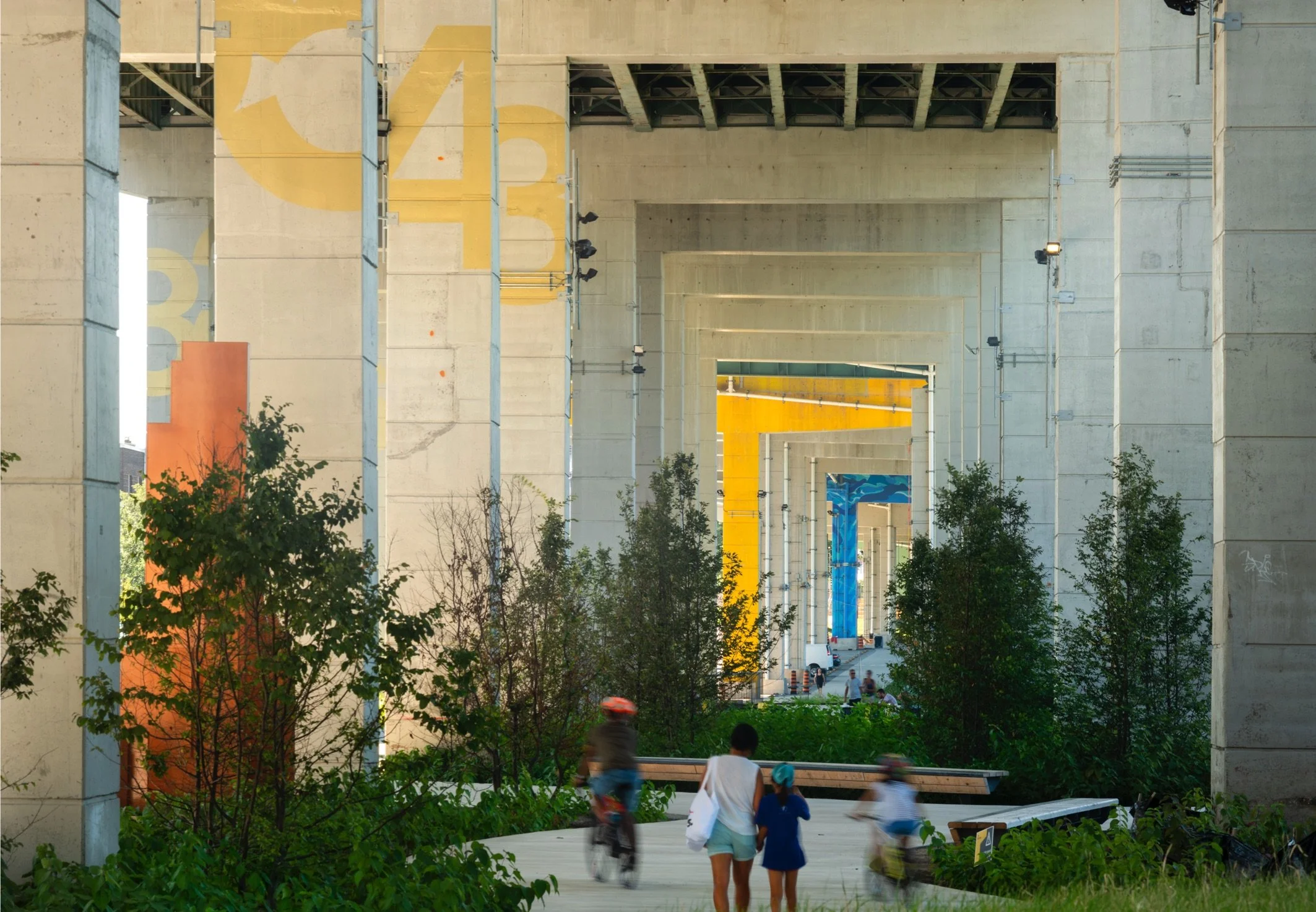
The Bentway is a growing events and shared public space hidden under the Gardiner Expressway in Toronto. In 2021, they approached the design team at Cossette to develop an identity for their summer-long art exhibition, Playing in Public, which looked at how space shapes play, how a city can change play, and how play changes our city.
The Bentway invited artists, community organisers and educators, to interpret and explore the idea of play within public spaces across over 169,000 sqft of public space in the city.
Ask & Challenge
The months-long event needed an identity that would draw visitors to the site continuously over the summer, not just a single stop in.
But who were these visitors? This was a central challenge to our project. With the event taking place across a huge swath of the city, it meant that the audience for it was as varied as the city itself. Families with young children, newcomers to Canada, young couples in the condos that surrounded the site, and elderly neighbours who lived in the townhouses nearby.
All of these audiences had different needs, literacy levels, and standards of accessibility that needed to not only be met by the identity, but encouraged and invited to explore and participate.
We needed an idea that could stretch across language, culture, and generations, while still providing strong wayfinding that could help these varied audiences navigate the sprawling location in a safe, intuitive and (most importantly) playful way.
Insight
I spent time reading the different artists’ perspectives on play, speaking with event organisers, and reading into sociological and anthropological definitions of play. What I found shaped the idea for the identity.
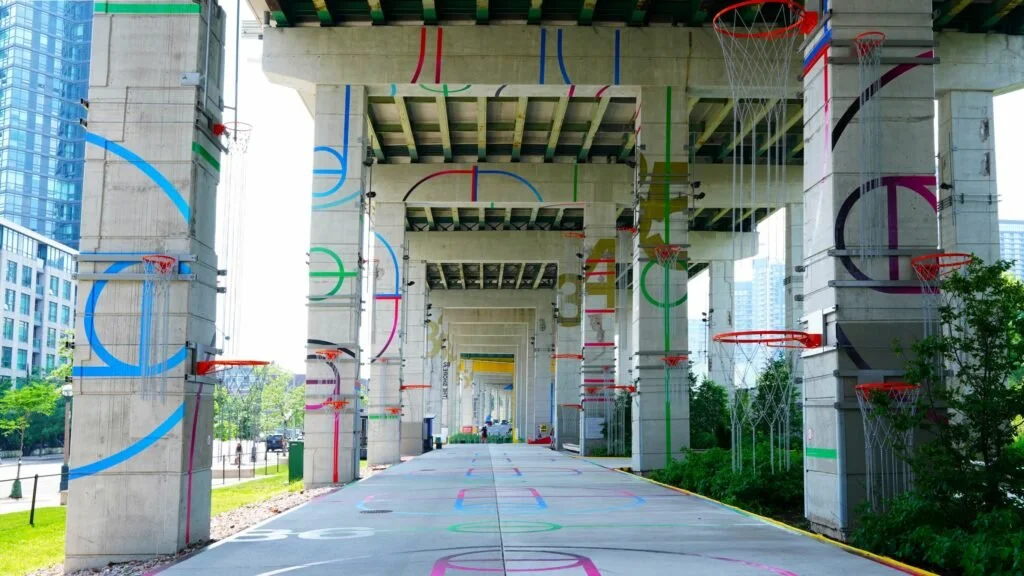
Until the age of 13, most people are able to find play wherever they look, creating what is known as a “Magic Circle”. A Magic Circle is an imaginary bound where the rules of the world change and are instead replaced with the reality and rules of the game. It can be delineated officially, such as a basketball court or a football field, or it can be imaginary, such as a living room floor that is transformed into “lava”.
Inside a magic circle, play is possible. And because a magic circle can be anywhere, play is possible anywhere. In fact, nearly every species plays. Some, like humans, dogs, foxes and crows, will even play between species. Only through a magic circle can we invite everyone to play, across languages, species, and borders.
Seeing the possibility of play in the space around us, creating an enormous magic circle that filled the city, allowed us to create a “universal language” of play as the heart of our design system.
We All Speak Play.
Approach
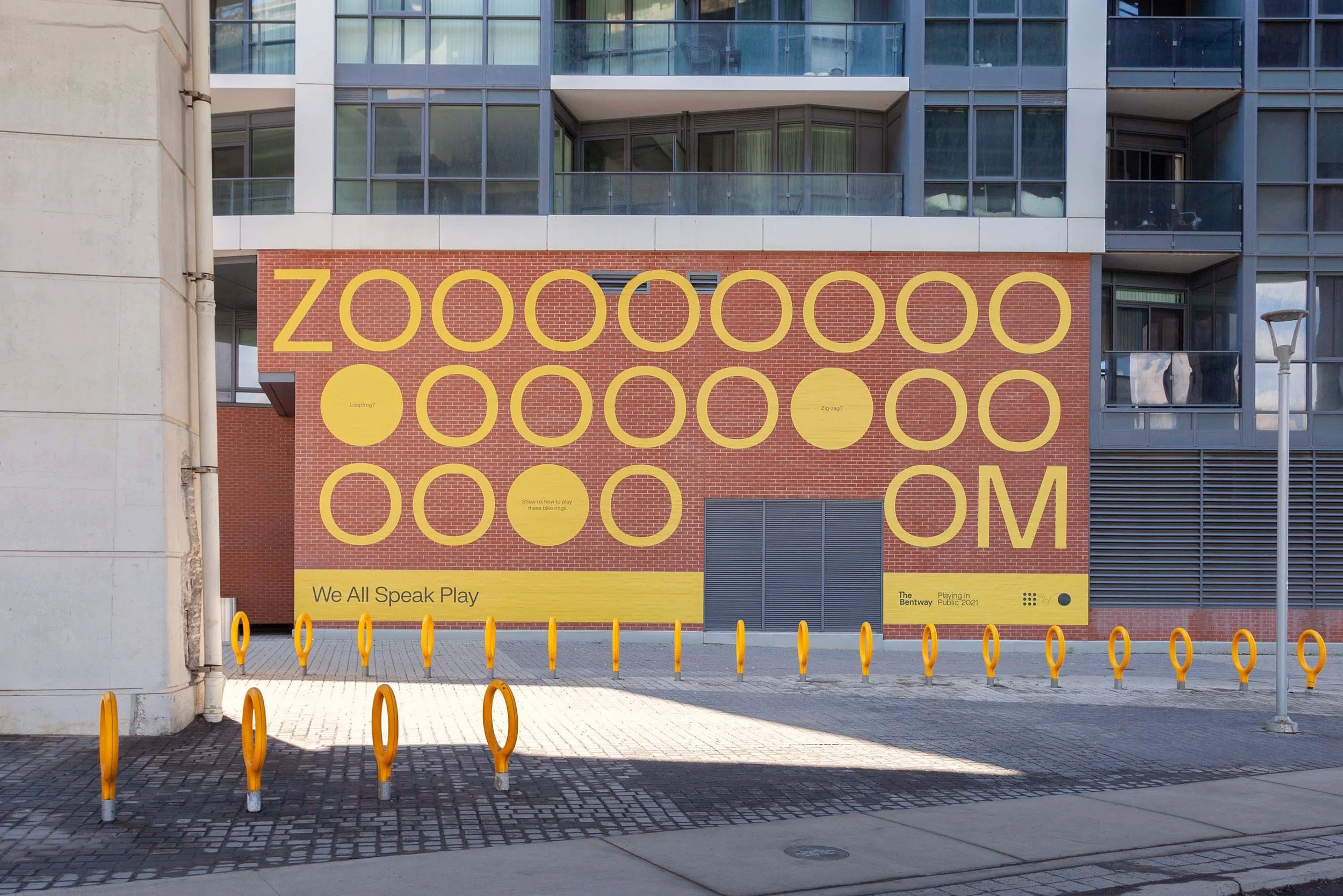
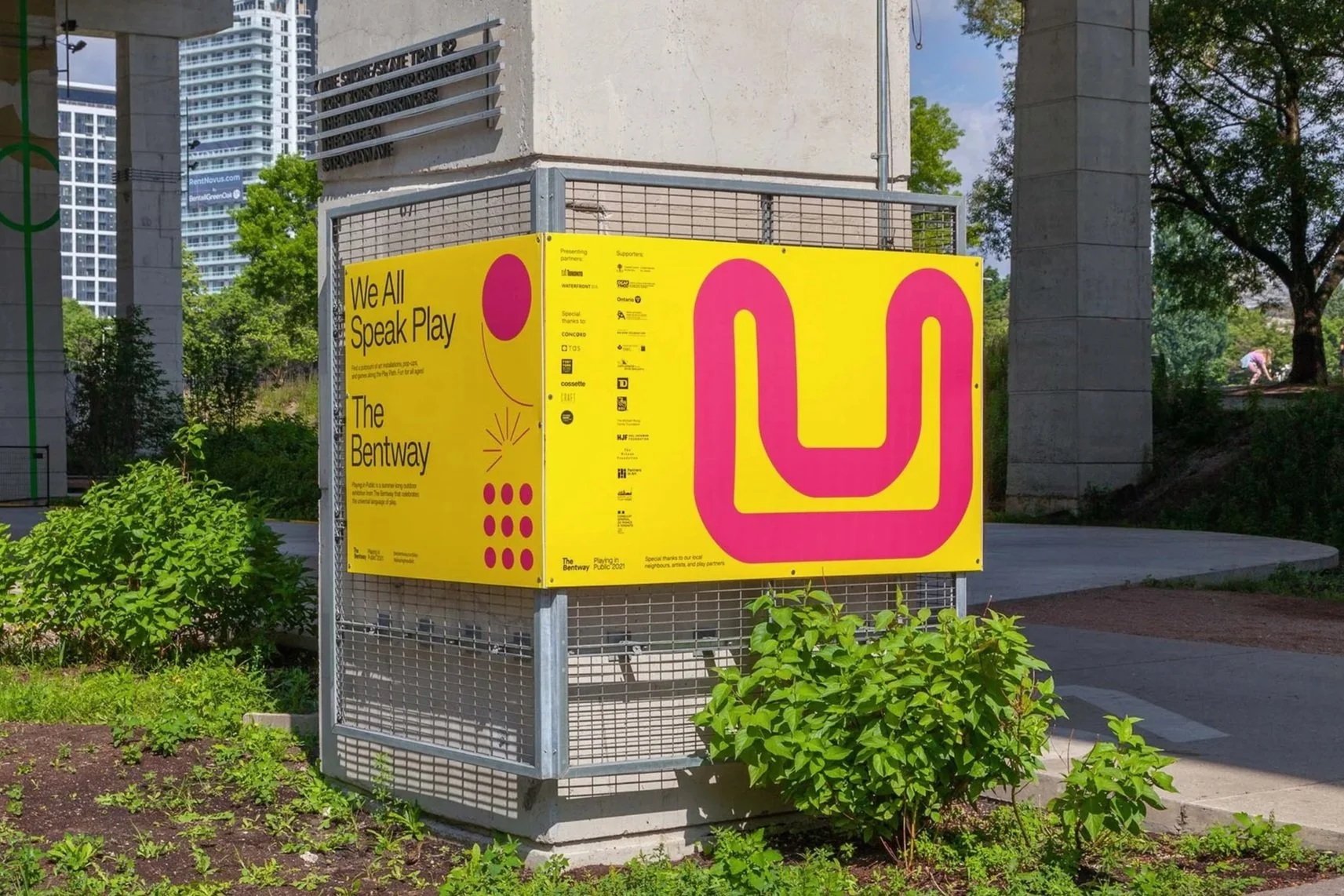
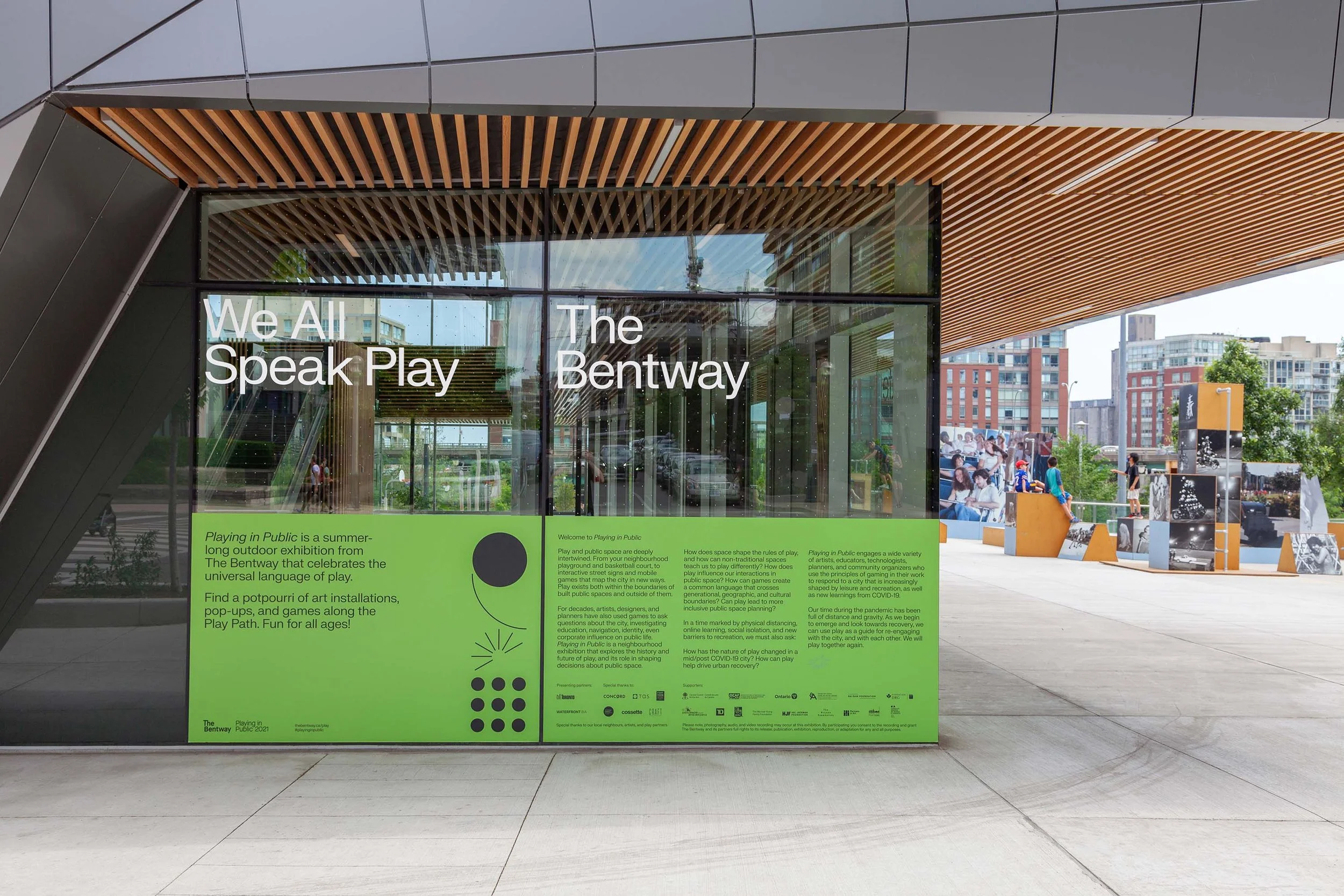
This central idea guided the design team. At its heart was the language of play, a collection of hand-illustrated icons, scribbles, and doodles which could be instantly interpreted in their playfulness, crossing barriers of language, background or age.
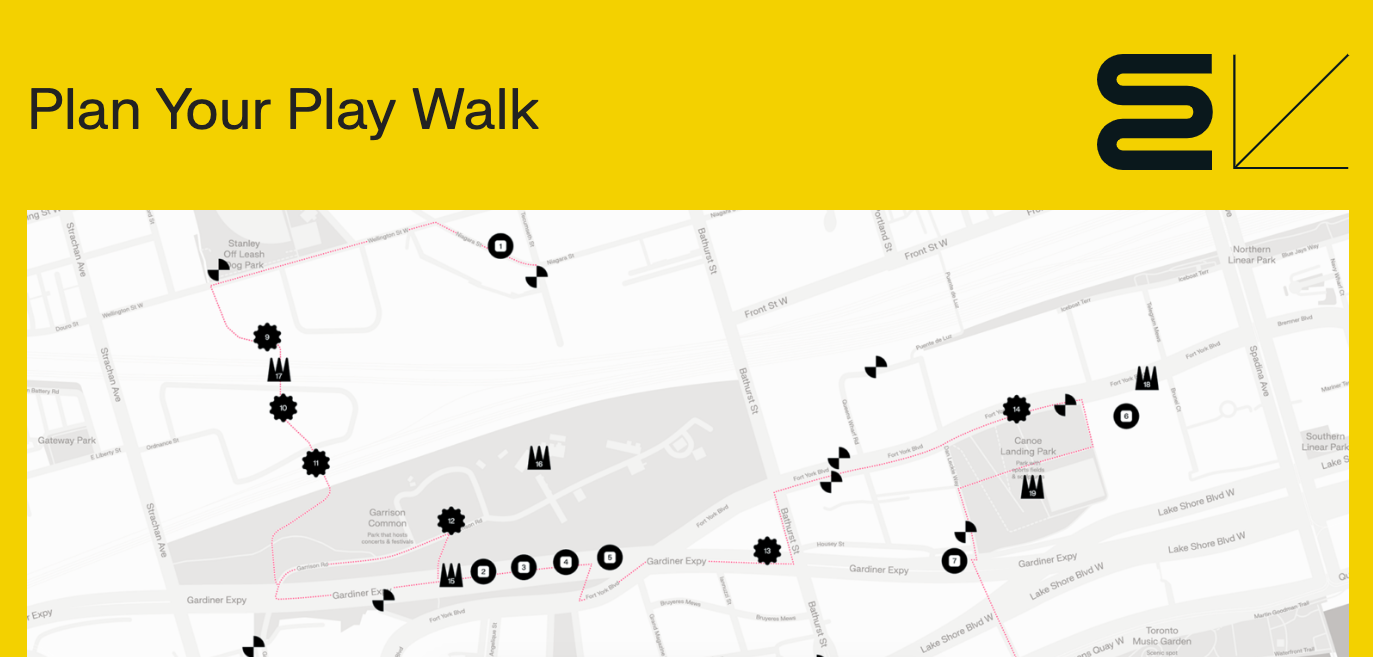
We used symbols, colours, and patterns to create zones that would break the neighbourhoods into easily digestible areas which could be returned to, revisited and re-explored.
Every area included moments that reshaped the audience’s perspective on play, moments for discovering silly shapes in the skyline, hopscotch down a hill, leap frogging bike racks. Every touchpoint was designed to not only help guide the visitor through the space, but to invite them to explore it through play.
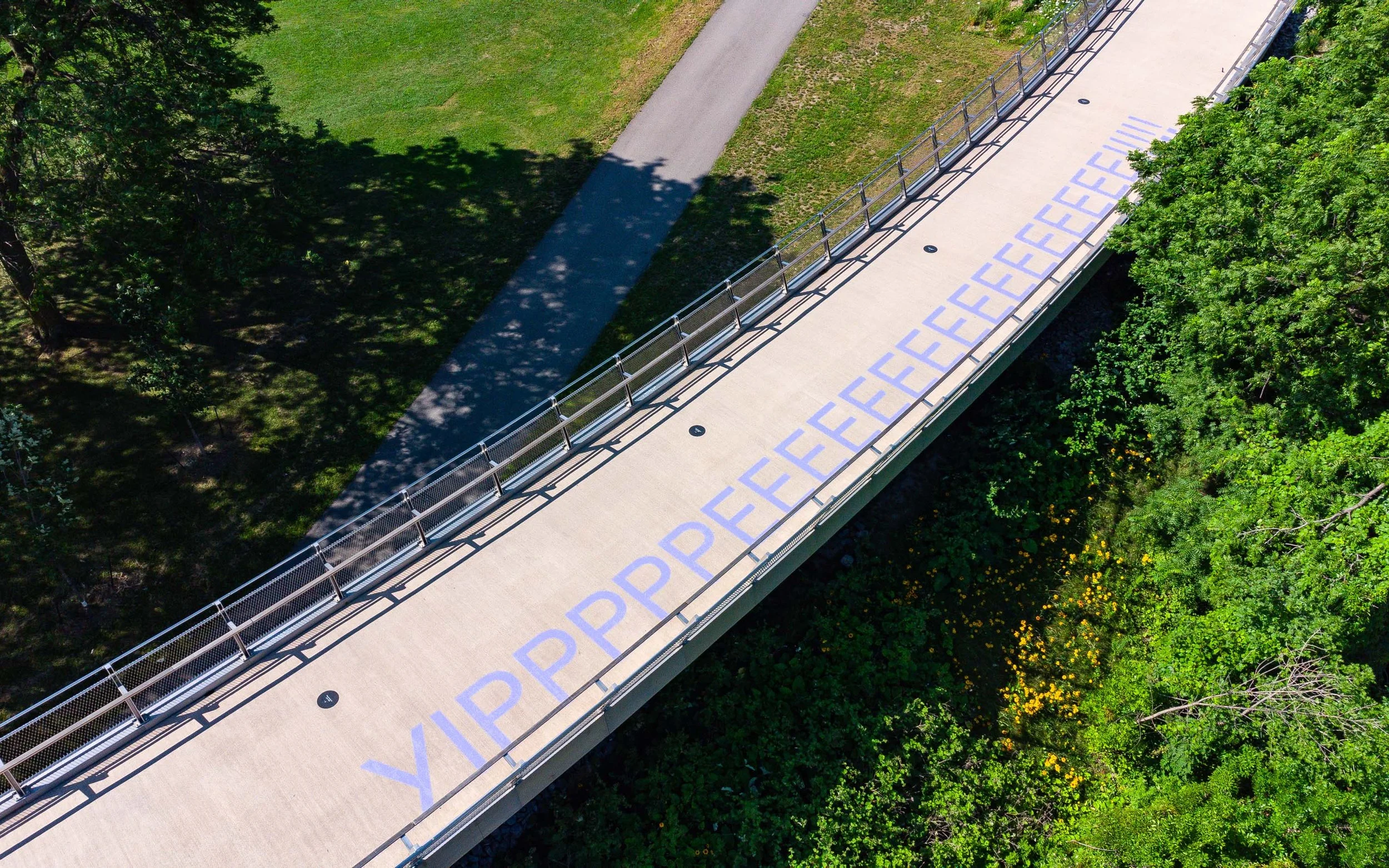
We made use of the unusual placements we had within the space, from ramps and staircases to park paths. We even took advantage of height and perspective as a mode of communication. Many of the neighbours we were inviting to the space lived in the often 50+ story condo buildings which surrounded the site. We created enormous signs on the ground which, when viewed from balconies above, became invitations to come and play.
“Play and design are synonymous. They both rely on imagination and a sense of discovery.”
Awards
2022 Strategy Marketing Awards – Silver for Graphics
2022 Applied Arts Awards for Pro Bono Series
Services
Interviews & research management
Identity development
Way finding & experience design
Campaign development
Marketing planning
Audience messaging matrixes